Pre-lease Contracts in the Hungarian Industrial Real Estate Market in 2026: How to Secure the Best Warehouses?
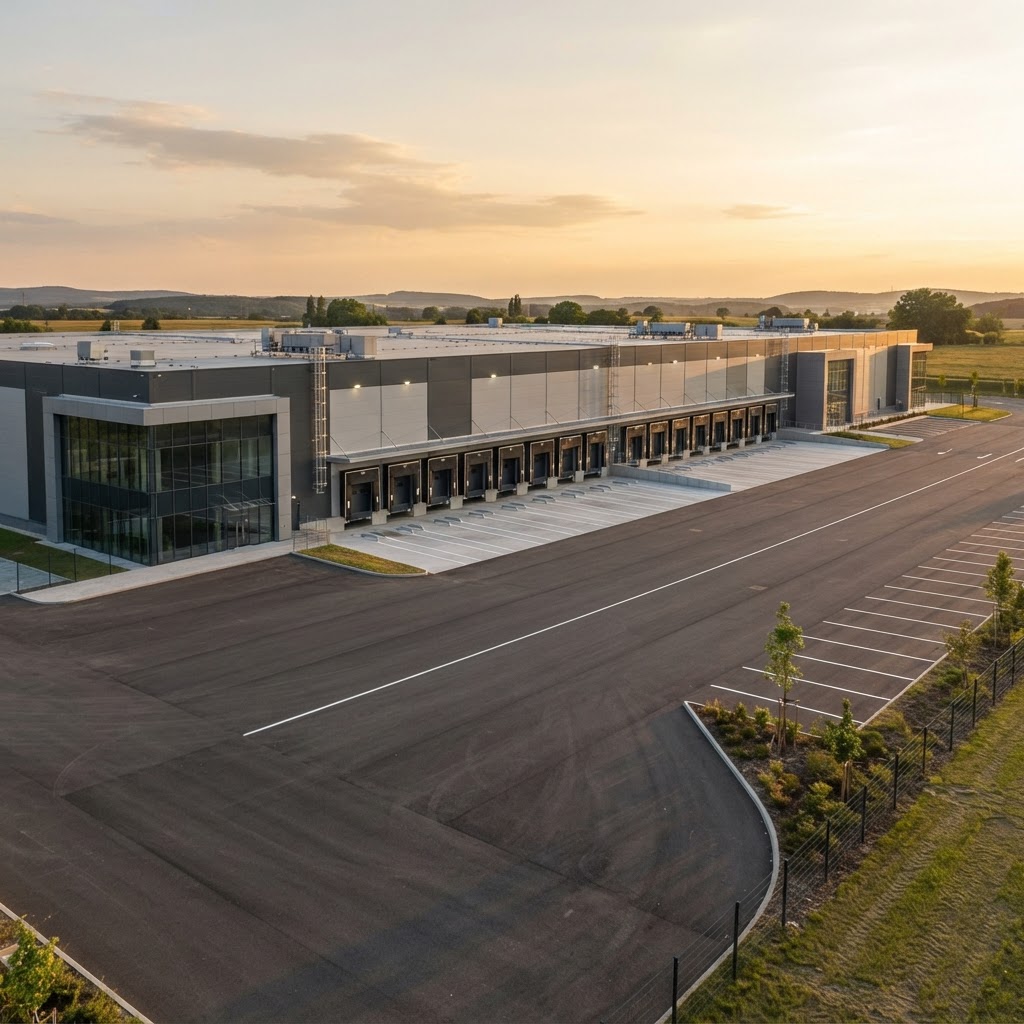
The Hungarian industrial real estate market in 2026 is facing an apparent contradiction: while the modern industrial and logistics real estate stock nationwide already exceeds 6.5 million square meters, and the vacancy rate stands at 13.2 percent, there is a real battle among tenants for the best, most modern buildings. According to an analysis by Portfolio.hu, nearly 500,000 square meters of new space are currently under construction, and 54 percent of these have already been secured with pre-lease agreements.
But why are more and more people choosing pre-leases, and what should a CEO or logistics decision-maker look out for when renting a warehouse straight from the drawing board or during the construction phase?
Market Polarization: Why is Pre-lease Booming in 2026?
Based on aggregated data, the market is becoming increasingly differentiated. The gap in vacancy rates between modern, energy-efficient properties and older, lower-quality facilities has widened further.
The operational and energy efficiency of new buildings directly reduces maintenance costs. Due to their favorable price-value ratio and numerous operational advantages, both existing partners planning relocation and new tenants prefer these developments. Since the number of completed, ready-to-move-in modern halls is limited in the most sought-after locations (such as the Budapest agglomeration, Győr, or Debrecen), companies are forced to think ahead.
Rent Trends in the Market
Rental fees also reflect this duality. While data from the Hungarian Logistics Association (MLE) shows that the rent for outdated properties is 5-5.25 euros per square meter, rents for newly built, ESG-compliant halls equipped with heat pumps and solar panel systems are higher. However, the higher rent (CAPEX) is amply compensated by lower utility and operational costs (OPEX).
What is a Pre-lease Agreement?
A pre-lease agreement is a contract between the developer (landlord) and the tenant, signed before the building is completed, and often even before construction begins. The tenant commits to a long-term lease (usually 5-10 years) of a specific area, and in return, the developer agrees to build and hand over the building according to the tenant's specifications by a given deadline.
What to Watch Out for When Signing a Pre-lease Agreement?
A pre-lease contract is much more complex than renting an existing warehouse. As a company leader, you must pay special attention to the following critical points:
1. Precise Definition of Technical Content (Fit-out)
The biggest advantage of a pre-lease is that the warehouse is tailored to the tenant's needs. However, what is not written in the technical annex will not be built – or only for a hefty premium.
- Floor load and flatness: Especially important if using very narrow aisle (VNA) forklifts or automated systems.
- Number of docks: The standard is usually 1 dock / 1000 sqm, but cross-dock or intensive e-commerce logistics require more.
- Electrical capacity: Due to modern automation and forklift chargers, the required Amper/kVA demand must be fixed in advance.
2. Timing of Handover and Delay Penalties
Delays are common in the construction industry. For a logistics company, a delay in warehouse handover can trigger a domino effect: failed contracts, penalties towards clients.
- Define a Target Handover Date and a Long Stop Date.
- Fix the rate of daily/weekly delay penalties.
- After reaching the Long Stop Date, the tenant must have the right to withdraw from the contract and claim damages.
3. Rent and Indexation
Since 12-18 months can pass between signing the contract and moving in, it must be clarified when the rent indexation (inflation tracking) begins. The best practice is for indexation to take effect only after the first full calendar year following the handover.
4. Expansion Options (Right of First Refusal / Expansion Right)
For a growing company, it is crucial to be able to expand its area in the future. It is worth stipulating a right of first refusal or pre-lease right for neighboring hall sections before the developer leases them to a third party.
Who Benefits from the Pre-lease Structure?
Pre-leasing is not ideal for everyone. It is recommended for companies that:
- Plan for the long term: Can commit to at least 5, but preferably 7-10 years.
- Have special needs: Cold storage, hazardous goods (ADR) storage, or unique manufacturing functions.
- Are looking for a large area: Finding a contiguous, modern space of over 5,000 square meters on the current market immediately is almost impossible.
- Act in time: Start their search at least 1-1.5 years before the move.
Summary
In the 2026 Hungarian industrial real estate market, the role of pre-lease agreements has appreciated due to the competition for modern, energy-efficient warehouses. Although the 13.2% national vacancy rate may seem high, this number is deceptive: high-quality spaces in good locations are snapped up in an instant. A well-written pre-lease agreement provides the company with the perfect logistics base while minimizing development risks.
Looking for a new warehouse or industrial property for your company? Don't miss out on the best developments! Use the Raktarak.com search engine, browse the latest available halls and pre-lease opportunities, or ask our experts for help in finding the perfect location!
Tetszett a cikk? Kérje a következőt emailben
Piaci elemzések és friss ipari ingatlan ajánlatok — hetente egy levél.
Looking for or offering industrial property?
Browse our listings or ask a question — we reply within 1 business day.