Is it still worth it with a 15% vacancy rate? New investment strategies in the Hungarian industrial real estate market in 2026
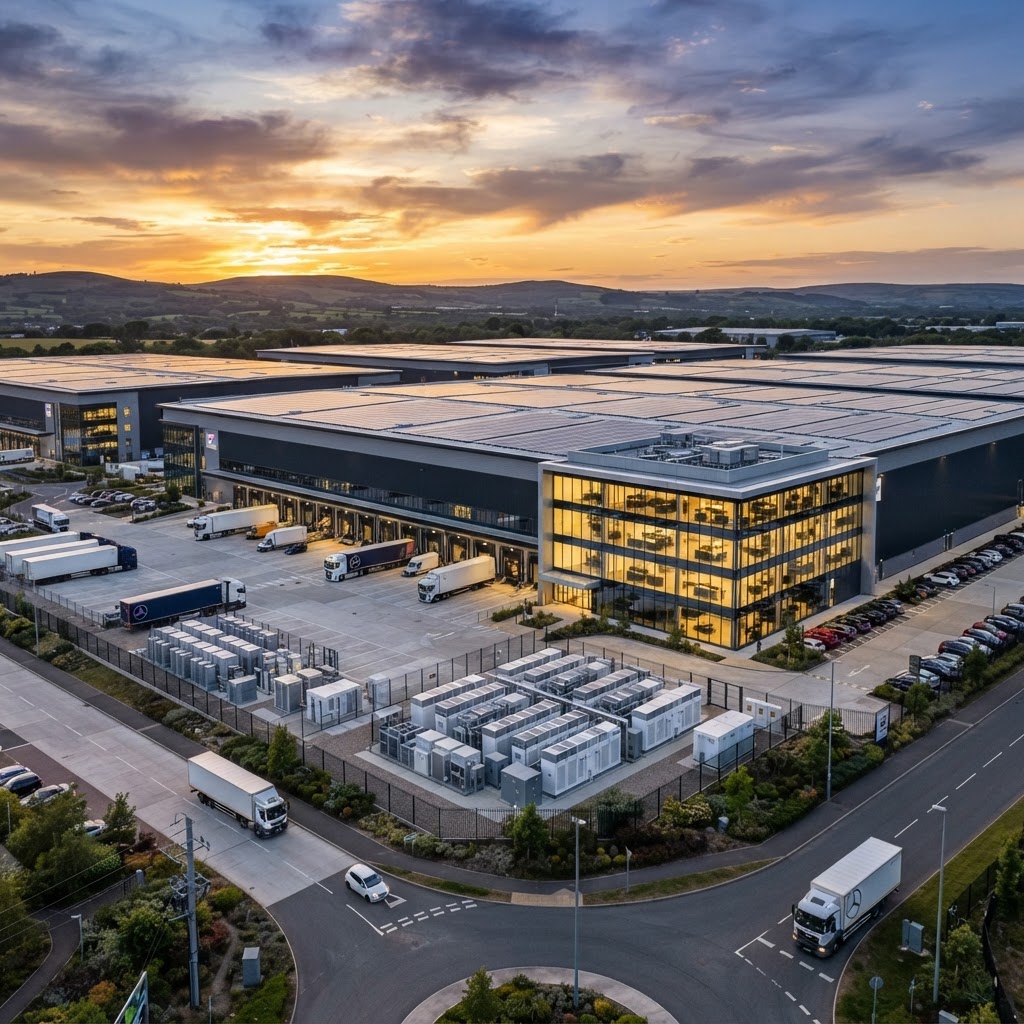
By 2026, the Hungarian industrial real estate market has entered a completely new phase of development. The explosive, often speculative quantitative growth of recent years has been replaced by qualitative consolidation. For investors, CEOs, and logistics decision-makers, the most important question today is no longer just where space is available, but what long-term value and energy security a given property can provide.
In this article, based on the latest 2026 market data, we analyze how investment strategies are evolving in a market where the vacancy rate is breaking historical records, while the premium segment still holds significant yield potential.
The Anatomy of the 15% Vacancy Rate
One of the most defining market trends in 2026 is the drastic rise in the vacancy rate. While a few years ago the market was characterized by a 2-3% rate, almost full occupancy, the latest data shows that the vacancy rate has risen to 15 percent. This number might seem alarming to investors at first, but looking beneath the surface reveals a more nuanced picture.
The increase in vacancy is primarily due to the handover of previously launched speculative developments and the slowdown in tenant decision-making. Companies now weigh costs, energy efficiency, and location much more carefully before committing to a new industrial or logistics property. This has led to the emergence of a tenant's market, where tenants start from a much better bargaining position, and investors must make their properties attractive with extra services.
The Quality Shift: What are Tenants and Investors Looking for in 2026?
According to Colliers' recent regional analysis, growth has returned, but on a qualitative rather than quantitative basis. Supply constraints, sustainability expectations, and the evolution of operating costs are the main drivers of market decisions.
For investors, this means that second-class, outdated (Class B and C) warehouses will face significant rent reductions and prolonged vacancy. In contrast, premium, ESG-compliant halls equipped with modern technology continue to attract capital. The return of international investors is well illustrated by the fact that HelloParks' logistics hall in Fót was purchased by an international investment company, indicating decreasing country risk and unbroken confidence in buildings with high sustainability ratings.
New Targets: Small Business Warehouses and the Appeal of the Countryside
In 2026, the investment focus is increasingly shifting towards diversification. Two main trends are clearly emerging:
- Small Business Warehouses (City Logistics / SBU): Alongside large logistics centers, there is a growing demand for smaller, flexibly adaptable warehouse spaces. Weerts Logistics Parks (WLP), for example, is attracting Hungarian small businesses with their own warehouses and an annual yield of 7 percent to premium locations like Vecsés and Ebes. This segment provides a stable tenant base and predictable yields for investors.
- The Rise of Rural Hubs: Developments are no longer limited to the Budapest agglomeration. CTP has launched the development of a new industrial-logistics park in Pécs, while Innovinia has handed over a nearly 31,000 sqm, fully customized (BTS) manufacturing unit in Nyíregyháza. Rural locations have become prime investment targets due to cheaper land prices and available labor.
Energy Security as the Main Value Driver
The DLA Piper 2026 real estate market overview highlights a critical problem: grid capacity shortage is a recurring obstacle for developers and tenants. The value of an industrial property in 2026 depends heavily on how independent it is from the central energy grid.
Investors and developers are increasingly using alternative energy models:
- "Behind-the-meter" solutions: Energy generated and consumed locally (e.g., extensive solar panel systems).
- Battery Energy Storage Systems (BESS): These systems not only guarantee energy security but also drastically reduce peak energy costs.
Industrial properties that lack such solutions suffer a significant "brown discount" in the market and will be much harder to lease or sell.
Investment Strategies for 2026: How to Minimize Risks?
In the current market environment, the key to successful industrial real estate investment is conscious risk management. Here are the most important steps:
- Focus on Built-to-Suit (BTS) projects: Instead of speculative developments, it is worth concentrating on customized projects backed by pre-lease agreements.
- Building Upgrades (Value-add investments): Acquiring older halls in good locations and upgrading their energy efficiency (insulation, heat pumps, solar panels) can result in significant value appreciation.
- Flexible Lease Structures: With a 15% vacancy rate, tenant retention is crucial. Contracts that allow for flexible space expansion or contraction provide a competitive advantage.
- Pricing in Climate and Insurance Risks: Climate risks are having an increasingly serious impact on property valuations and insurance premiums. Proper drainage and structures resistant to extreme weather are now basic requirements.
Summary
The Hungarian industrial real estate market in 2026 is no longer the terrain of easy, quick yields. The 15% vacancy rate urges caution, but high-quality, energy-efficient, and well-positioned properties (whether rural BTS projects or urban small business warehouses) continue to offer excellent investment opportunities. Capital is flowing towards smart, sustainable solutions.
Are you ready to find the perfect industrial property for your investment portfolio, or are you looking for a modern, energy-efficient warehouse for your company? Use the detailed search engine on Raktarak.com and browse the latest industrial properties, halls, and logistics parks for sale and rent across Hungary!
Tetszett a cikk? Kérje a következőt emailben
Piaci elemzések és friss ipari ingatlan ajánlatok — hetente egy levél.
Looking for or offering industrial property?
Browse our listings or ask a question — we reply within 1 business day.